
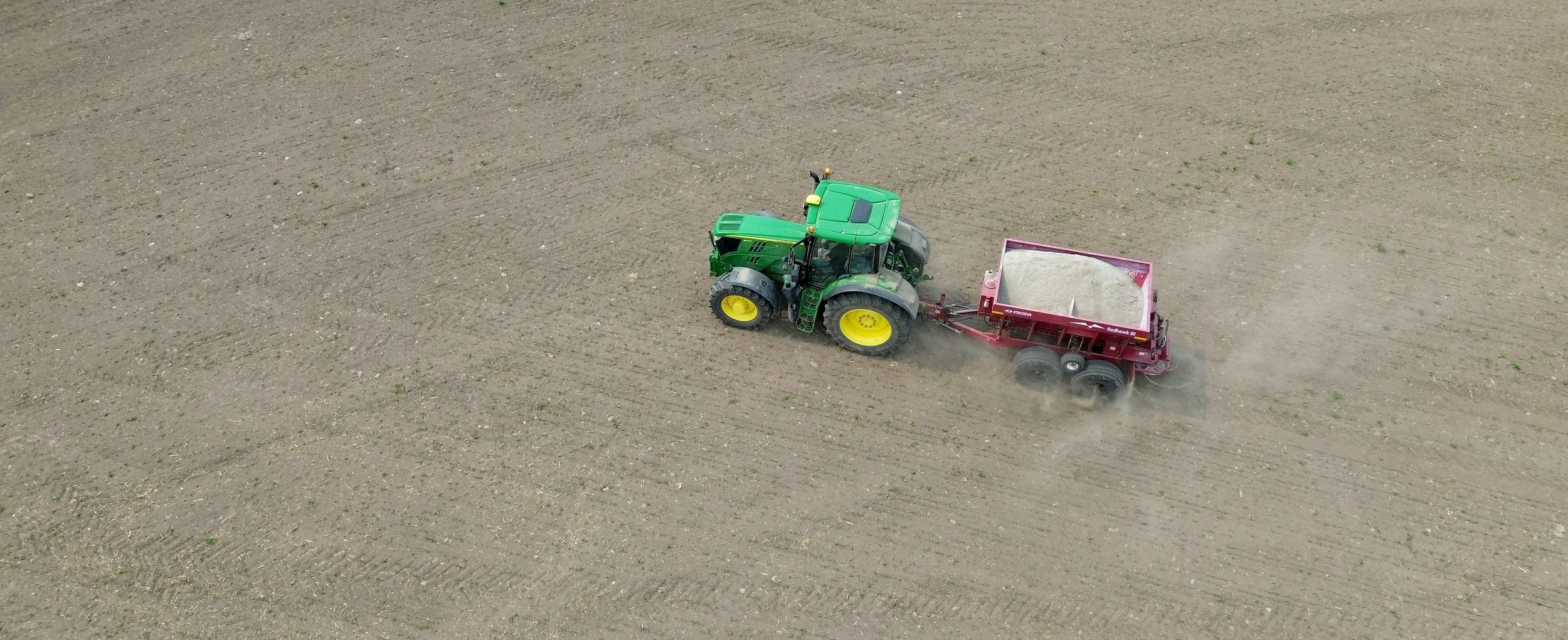
We published a new opinion editorial in the Proceedings of the National Academy of Sciences (PNAS) examining how enhanced rock weathering (ERW) can be scaled as a climate solution. In the paper, "Enhanced rock weathering has greater promise as a sustainable farming practice than a CO₂ removal technology," we argue that ERW should be viewed primarily as a sustainable agricultural practice rather than a carbon credit-driven technology.
The article highlights the challenges associated with costly monitoring, reporting, and verification (MRV) requirements and proposes a farmer-led deployment model supported by government incentives, streamlined carbon accounting, and a focus on soil health. We suggest that replacing agricultural lime with alkaline silicate rock powders could improve soil quality while delivering meaningful carbon dioxide removal as a co-benefit.
The publication contributes to ongoing discussions about how enhanced rock weathering can be deployed responsibly, efficiently, and at the scale needed to support climate mitigation goals.